

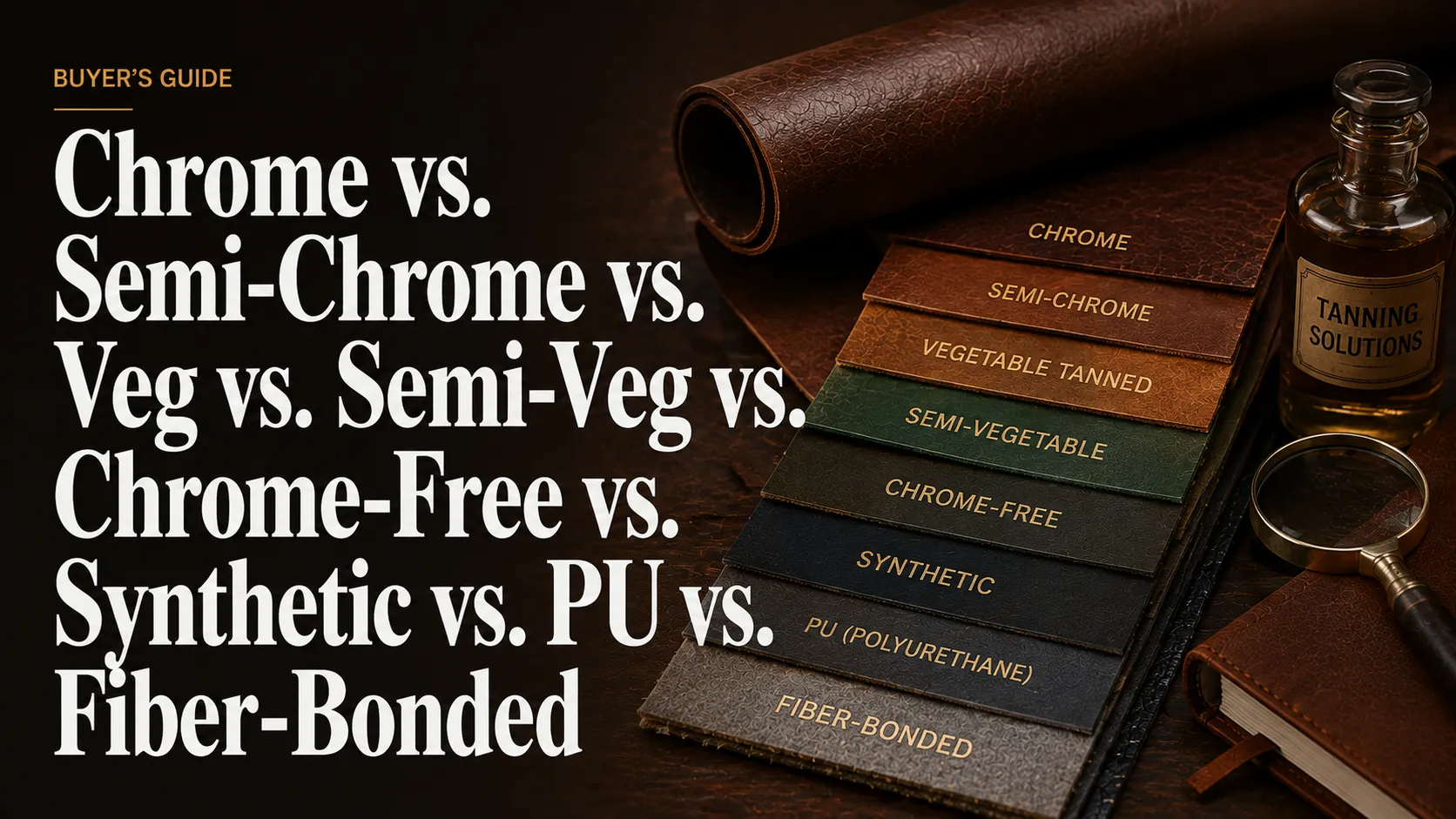
The complete tanning and material comparison — eight processes, one honest guide
Four of these eight categories are genuine tanning processes applied to real hide. The other four aren’t tanning at all — they’re ways of building a belt-shaped material without a hide, or with only a fraction of one. Confusing the two groups is where most belt-buying mistakes start.
The Four Genuine Tanning Methods
- Chrome Tanned: Process: Chromium III salts, typically 1–2 days. Feel: Soft, supple, uniform color. Aging: Stable but doesn’t develop a rich patina. Best for: Everyday belts needing consistency and flexibility. ~80–85% of world leather production.
- Semi-Chrome Tanned: Process: Chrome tan followed by a partial vegetable or synthetic retan. Feel: Firmer than pure chrome, more character in the grain. Aging: Slight patina development. Best for: Balancing chrome’s efficiency with some of veg tanning’s depth.
- Veg Tanned: Process: Natural tree bark and plant tannins, 2–8 weeks. Feel: Firm, structured, holds an edge and a stamp well. Aging: Darkens and develops a genuine patina with wear and sun. Best for: Premium belts meant to visibly age with the owner.
- Semi-Veg Tanned: Process: Mineral tan first for efficiency, vegetable retan second for character. Feel: Closer to veg-tanned firmness at a fraction of the production time. Aging: Moderate patina. Best for: Premium feel without full veg-tan lead times and cost.
Chrome-Free Tanned
“Chrome-free” doesn’t mean untanned — it means tanned using an alternative to chromium salts entirely: aluminum, zirconium, titanium, or oxazolidine-based agents, sometimes marketed as “Ecotan” or similar branded processes. It exists specifically to eliminate any Chromium VI formation risk at the source, since there’s no chromium in the process at all. It’s genuine leather, with performance broadly comparable to chrome-tanned hide, at a materials cost premium and with a smaller global supply base than chrome or veg tanning.
The Three Non-Leather Categories
- Synthetic: A general umbrella term for any non-leather material engineered to look like leather — includes PVC and PU-based products. No hide content of any kind.
- PU (Polyurethane): A polyurethane resin coating over a fabric base (polyester, cotton canvas). The most common synthetic belt material. Lifespan: 2–3 months of regular wear before cracking or peeling.
- Fiber-Bonded Leather: Real leather scrap and shavings, shredded to fiber and bonded with polyurethane or latex under heat and pressure into a sheet, then coated and embossed. Contains genuine leather fiber by weight, but behaves structurally like reinforced PU — no continuous fiber structure, no meaningful patina, and a lifespan far closer to synthetic material than to tanned hide.
Full Comparison Table
| Method | Real Hide? | Typical Lifespan | Character |
| Chrome Tanned | Yes | 10–15 years | Soft, uniform, consistent |
| Semi-Chrome Tanned | Yes | 12–18 years | Firmer, slight patina |
| Veg Tanned | Yes | 20–25 years | Firm, rich patina over time |
| Semi-Veg Tanned | Yes | 18–22 years | Balanced firmness and patina |
| Chrome-Free Tanned | Yes | 10–15 years | Comparable to chrome, no Cr VI risk |
| Fiber-Bonded Leather | Partial (fiber only) | 1–2 years | No continuous grain, no real patina |
| PU (Polyurethane) | No | 2–3 months | Cracks, peels, no patina |
| Synthetic (general) | No | 2–6 months | Varies by construction, no patina |
Where Leather Destiny Stands
Leather Destiny works with full-grain hide using chrome, semi-chrome, and vegetable tanning methods sourced from LWG-certified tanneries — never fiber-bonded, synthetic, or PU material. The tanning method changes the feel and the price point; it never changes whether the belt is genuine.